- The US has hit Apple with a lawsuit for breaking anti-trust laws.
- If Apple loses, it presumably has to open its ecosystem features to the market.
- Google could take on this opportunity to establish a strong Pixel foothold by offering great devices at relatively cheaper prices than iPhones.
From the Spotify lawsuit last month to the EU forcing USB Type-C adoption , enabling sideloading, and third-party app stores, Apple’s legal woes continue to mount. Just as we thought the dust would settle, the US government hit Apple with a lawsuit that accuses Apple of breaking the anti-trust laws by “blocking rivals from accessing hardware and software features of its iPhone” and for having a monopolistic approach. While we will barely dwell upon the same, let’s explore how Google can capitalize on this situation and solidify its market position.
What Is the Apple Lawsuit All About?
According to the 88-page complaint released by the US, Apple’s monopoly breaks anti-trust laws, and the company abuses customers and developers by locking them into the App Store, charging them a fixed commission fee on transactions.
Besides, the document also highlights how Apple makes almost all its software and hardware impossible to work with others, be it the Apple Watch or iMessage, creating a kind of “social stigma” that directly benefits the firm.

Some of the other complaints were how Apple blocks cloud gaming apps on the App Store and forces and locks people into their ecosystems which immensely benefits the company.
It is important to remember that the lawsuit did not come into action due to the Department of Justice but because of companies like Beeper , Spotify, and Tile accusing Apple of bad industry practices and flexing its monopoly.
Is the lawsuit justified? I’m no expert. However, being an Android user, iPhone users would instantly label my opinions as polarising. I think some things highlighted in the lawsuit need the department’s attention. Take the Green-Blue bubble controversy, for example.
What Apple does is discriminatory and it’s quite apparent that the giant wants people to switch to iMessage by purchasing an iPhone. It’s obvious that Apple fears the thriving competition in the market and hence won’t open up the ecosystem for its benefit. I’m not saying Google is better nor do I mean Apple needs to bow down and give up on what it has built. But I do have a problem with how Apple rolls and tries to shut the competition with its monopoly.
Lawsuit Thins the Line Between Android and iPhone
Apple has already released a statement saying “We believe this lawsuit is wrong on the facts and the law, and we will vigorously defend against it,” but, a potential loss could significantly impact the company’s future. Let’s explore some possible scenarios.
- Apple opens up iPhone features and its hardware ecosystem.
- Services like Apple Pay, iMessage, and other apps would be available on Android.

I don’t blame you if you giggled while reading the above pointers. It sounds impossible, and I’m sure Apple will figure out a way, a possible loophole through this, but the chances of escaping are not 100%. A man can dream, though.
If the court’s decision does thin the line between Android and iPhone, we might see bulk platform migrations, since it’s given that people would be more willing to pivot from iPhones to give other manufacturers a shot.
Setting the Tone for Future Pixels
This is an opportunity that Android manufacturers, especially Google wouldn’t want to miss out on. Google has worked hard to raise the Pixel’s market share to the current 5% in the USA, according to the IDC. Launching targeted devices could attract iPhone users considering a switch. A sub-$500 Pixel A-series phone might be particularly appealing, offering a compelling alternative to the potentially redundant $799 iPhone upgrade.
Nothing is perfect and Pixels are known for having issues with both hardware and software. If the gap between Android and iOS narrows, some users might prioritize other Android options that offer stronger hardware. This could still benefit Google’s overall Android ecosystem. However, others accustomed to iOS might simply stick with iPhones.

If Apple loses, people would only have to bother with the pricing and the value the device brings to the table. If users are able to use iMessage, FaceTime, Apple Pay, and AirDrop on Android phones, it would largely mean that someone who has found themselves stuck in the Apple ecosystem might be willing to switch to other budget Android alternatives. Google’s A-series devices, hopefully, could be able to fit right in the gap and Google can capitalize on the Android-ification of iPhones.
Sadly for the Cupertino giant, this would translate to heavy losses due to a decline in sales. We’re just shooting arrows in the air but the idea of having iPhones and Androids working together excites me.
There’s not much Google needs to do except continue developing useful ecosystem features. The Pixel 9 could feature the last Samsung-made Tensor SoC, the G4. Google is working on making its own SoCs based on TSMC’s process, which should hopefully fill the hardware gap in Pixels. And lastly, Google needs to keep the pricing in check.
Abubakar covers Tech at Beebom, with his passion for technology tracing back to 2011 when he received a Dell Inspiron 5100 as a gift. He’s also a passionate advocate for the right-to-repair movement, believing in empowering users to maintain and extend the life of their devices. Outside the tech world, he enjoys watching anime and exploring his newfound enthusiasm for Japanese cars. In his free time, you’ll often find him immersed in Genshin Impact or researching his next gadget purchase. Before joining Beebom, he contributed to leading publications like Android Police, How-To Geek, and Fossbytes.
Add new comment
Name
Email ID
Δ


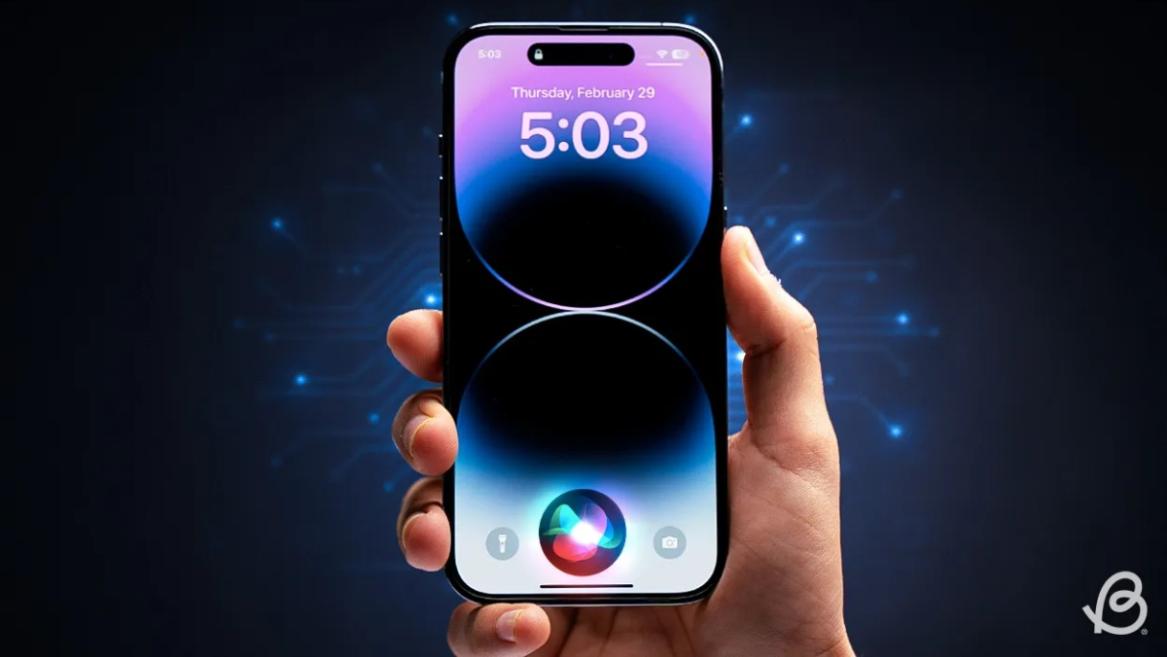
- Apple and Google have officially confirmed their team-up for the next-gen Siri AI.
- The Cupertino Giant will be using Google’s Gemini for a more personalized Siri model as well as Apple Intelligence features.
- We can expect the next-gen Siri to come out with iOS 26.4, sometime in March or April.
Apple has officially confirmed joining forces with Google to use its Gemini AI model to power the next-generation Siri. It will offer a more personalized experience and will be coming out with the iOS 26.4 update. Apple also plans to leverage Gemini’s capabilities for other Apple Intelligence features as well, later down the line.
The Next-Gen Siri will be powered by Google’s Gemini AI
Apple officially confirmed that it will be partnering with Google in a statement to CNBC . Here’s what it stated, “After careful evaluation, we determined that Google’s technology provides the most capable foundation for Apple Foundation Models, and we’re excited about the innovative new experiences it will unlock for our users.”
Later, Google also shared a post on X confirming the tie-up, “Apple and Google have entered into a multi-year collaboration under which the next generation of Apple Foundation Models will be based on Google’s Gemini models and cloud technology. These models will help power future Apple Intelligence features, including a more personalized Siri coming this year.”
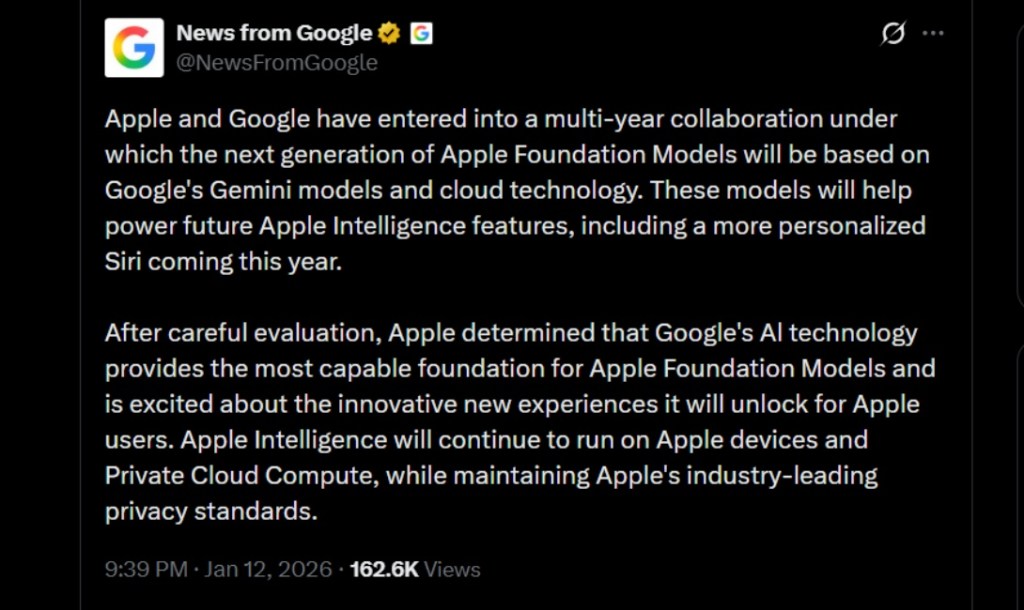
Image Credit: X/@NewsFromGoogle
Both statements clearly mention that the Cupertino Giant will be using Gemini to power its assistant Siri. This was already rumored, as Apple’s attempts to acquire Perplexity went nowhere. With Gemini, Siri will get a major AI update . It will be able to handle more nuanced conversations and provide better results. Something long-time Apple users have been asking for years.
The next-gen Siri will arrive with the iOS 26.4 update, which will launch sometime in March or April. And it is only going to be available for Apple Intelligence-supported devices .
Something else worth noting is how Google’s statement mentions that Gemini will power Apple Intelligence features. This leads us to believe that Apple could use Gemini’s multi-modal capabilities for its Writings tools , Image Playground , and Message summaries, too.
Elon Musk Not Happy With Apple and Google Tie Up
xAI CEO Elon Musk also responded to Google’s announcement post on X, sharing his thoughts on the matter by saying, “This seems like an unreasonable concentration of power for Google, given that they also have Android and Chrome.” Though we don’t expect either Apple or Google to respond to Elon, we will update the situation as it progresses.
It is worth noting that xAI is the company behind Grok, which is in hot water currently due to its inappropriate image generation fiasco , and has been getting backlash from multiple news outlets, X users, and even government authorities.
With over 4 year of experience under the belt, I cover all facets of consumer tech, from smartphones to other consumer electronics, our favorite social media apps, as well as the growing realm of AI and LLMs. As an Apps and AI writer app Beebom, I provide my expertise in all these areas, weaving stories that help you get familiar with the tech around you. But you will find me playing NYT daily puzzles in my free time.
Add new comment
Name
Email ID
Δ
