Is iMessage not working for you? Are the blue bubbles showing up as green ones? Or is it showing you an iMessage activation unsuccessful error? These are some common issues with Apple’s iMessage service that can occur due to several reasons. If you are facing any of these issues, then keep reading as we cover some of the most common troubleshooting methods to fix iMessage not working on your iPhone, iPad, or Mac.
Why is iMessage Suddenly Not Working?
It can be difficult to pinpoint exactly why iMessage is not working on your iPhone out of the blue. It could be the result of the dual SIM bug that plagues iOS 26 devices , an issue with your data plan or internet connection, or the iMessage service could be down altogether. Since we can’t get into the specifics of your situation, we have discussed different troubleshooting techniques to help you fix the problem with iMessage.
Easy Checks to Fix iMessage Not Working on iPhone, iPad, and Mac
Let’s first go through some basic checks to make sure that the iMessage not working problem is not caused by some fundamental reasons.
Make sure you’ve set up iMessage
When you switch to a new iPhone, change carriers, or get an E-SIM, your iMessage service could get turned off on its own. There is also a chance that a recent software update disabled the service on your iPhone, iPad, or Mac. So let’s ensure that the iMessage is turned on and set up correctly.
- On your iPhone or iPad, go to Settings > Apps > Messages .
- Here, make sure the iMessage toggle is turned ON.
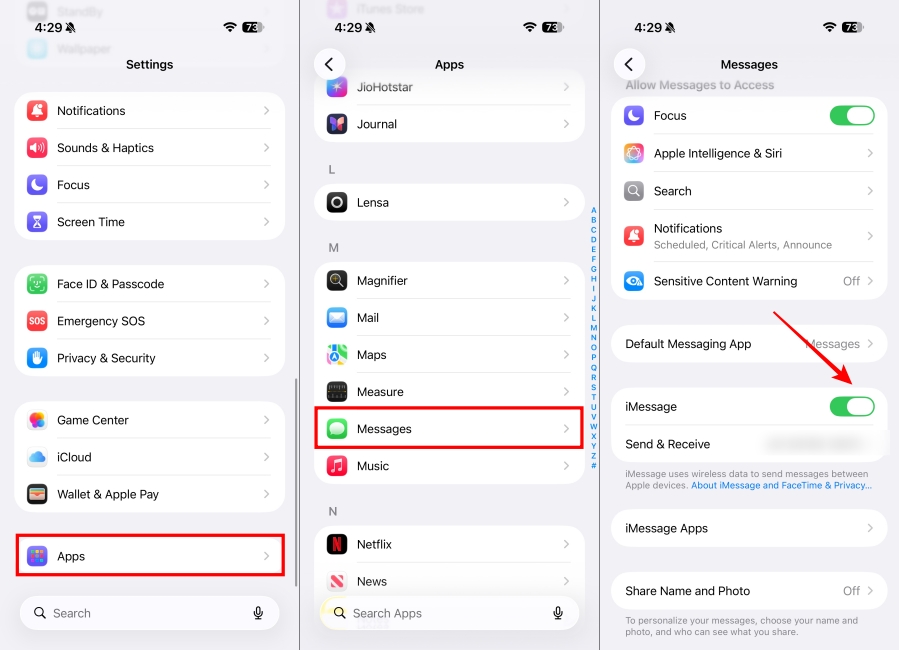
- Then, tap on Send & Receive. You’ll see a list of phone numbers and email addresses that are associated with your iMessage account.
- Check that your phone number is selected in both sections, especially in the Start New Conversations From section. This ensures that iMessage is activated for your number.
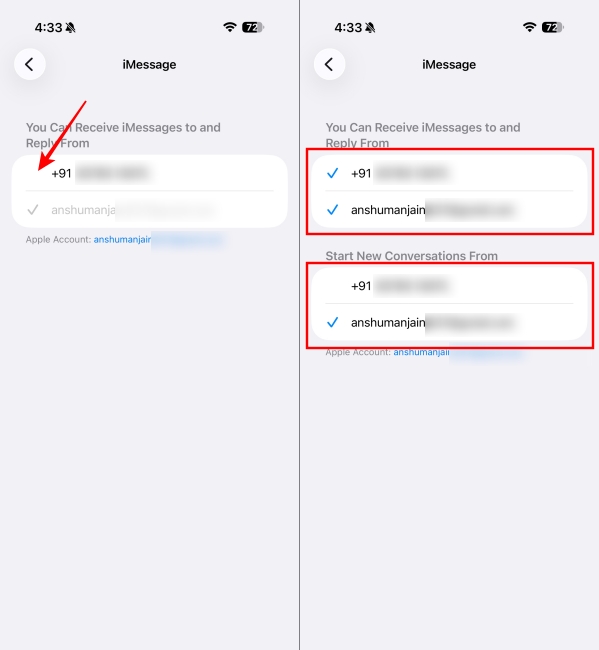
- If you’re using a Mac or an iPad (Wi-Fi-only model), make sure to select the right email addresses from which you wish to send & receive iMessages.
Note: Even if iMessage is turned on, try turning it off > restart your iPhone/iPad > turn on iMessage again. This could also help fix the iMessage not working if you have recently switched to a different carrier or using a new device.
If you are facing a ‘waiting for activation’ error, we have a dedicated guide to help you fix iMessage activation errors .
Verify if you’re texting an Android user
In case you are seeing green bubbles instead of blue bubbles in the iMessage chat, and you are unable to share photos, videos, and stickers with them, then it could be possible that the person on the other end is using an Android device.
iMessage will show a green bubble when texting Android or other device users since it uses the SMS protocol. Even if you have enabled RCS on your iPhone , it will still show green bubbles in the chat. To verify this, you can try sending a message to someone else whom you usually see blue bubbles in the chat.
Check your internet to fix iMessage activation issue
If you are seeing an iMessage activation unsuccessful error, it might be due to internet issues. This can occur when you switch SIMs or change carriers, or you don’t have enough data plan. Since iMessage is an online service, you can’t use it without that. So ensure you have plenty of 4G/5G data left in your plan.
If you have access to Wi-Fi, then check whether your iPhone, iPad, or Mac is connected to it and has a stable internet connection. To verify that, you can try opening a website in Safari. If the website won’t open or it says your iPhone is not connected to the internet, you’ve figured out why iMessage is not working for you.
Note: Also make sure to turn off any VPN or DNS services that you are using as it can also clash with iMessage services, preventing it to work properly.
Here are other ways to troubleshoot internet issues:
Check if iMessage is Down
There is a possibility that iMessage servers are down. Although it’s rare, the servers might be down due to a massive bug, or for repairs and maintenance. When it happens, iMessage won’t work for anyone.
To verify, head to Apple’s System Status Page , which lists all the recent outages by Apple. If there’s an issue with iMessage, it will be flagged as Yellow. Whereas running services are indicated with a green dot.

Even though the System Status Page indicates that everything is fine, there can be an outage that’s local to you. To verify, you can head to DownDetector . It offers detailed outage reports for the past 24 hours, along with an outage map that shows whether you’re in an affected area.
Check Date and Time
Another reason iMessage is not working for you is the incorrect date and time. This is because any mismatch between your device’s date & time and the server’s date & time can impact network-related functions, including iMessage and FaceTime . To avoid such issues, set the date & time to adjust automatically.
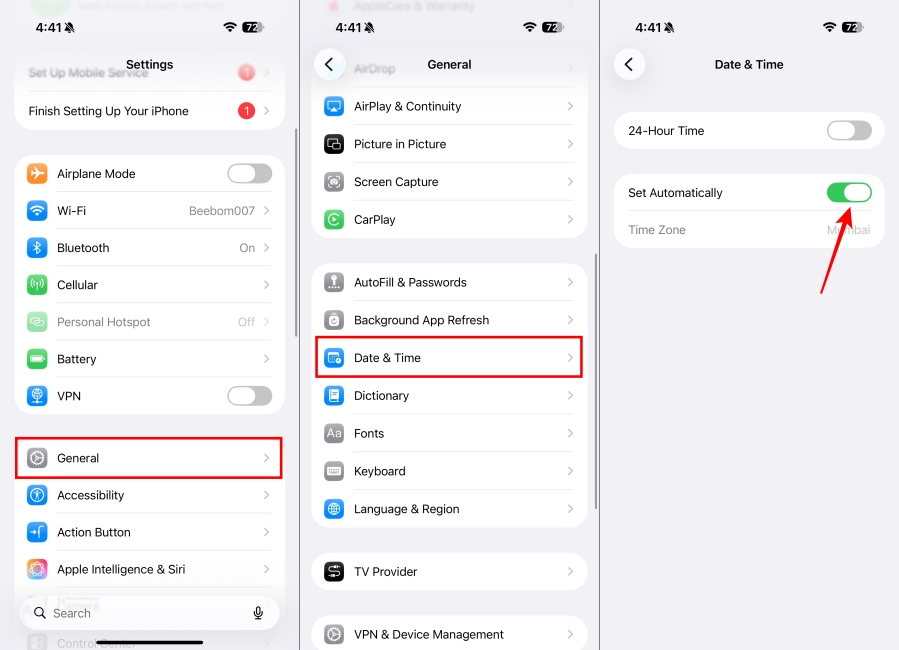
- Open Settings > General > Date & Time .
- Make sure to turn on the Set Automatically toggle.
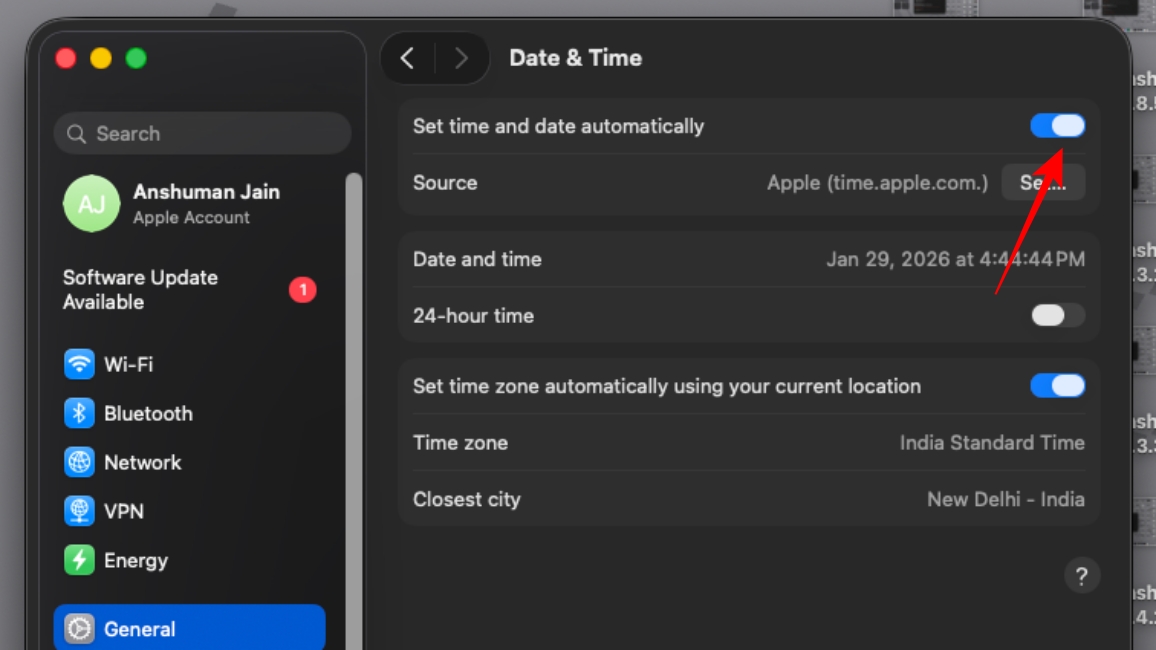
- On Macs, go to Apple Menu > System Settings .
- Go to General in the sidebar. Then, click on Date & Time on the right.
- Here, turn on the Set date and time automatically toggle.
Low Storage Space on your iPhone, iPad, or Mac
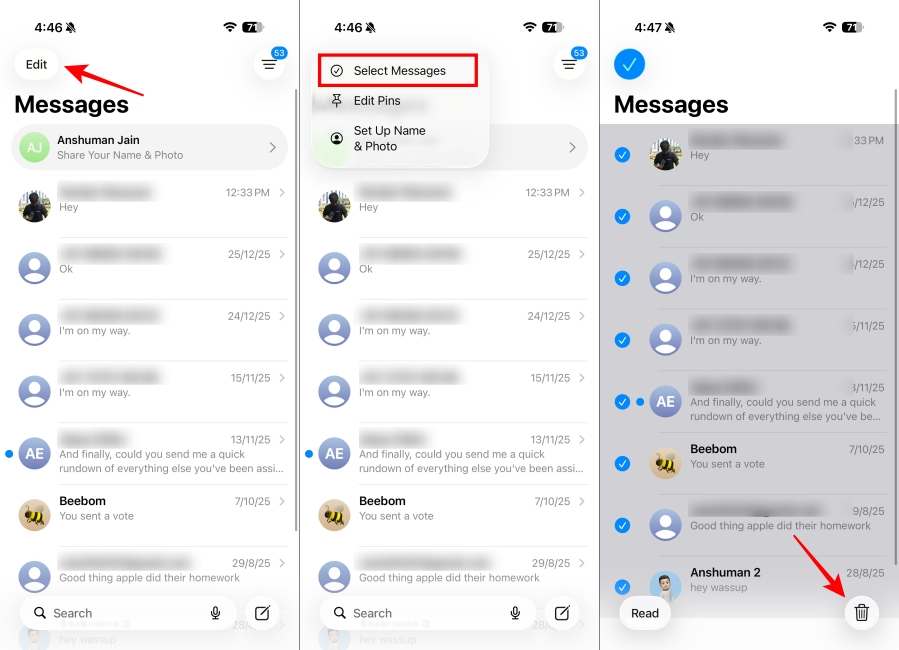
In case you can send iMessages from your iPhone, iPad, or Mac, but are not able to receive new ones, then your device might have run out of storage space. Also, if the Messages app has a lot of photos and videos, the iMessage system might work more slowly. In such cases, the best option is to delete older messages and make space for new ones.
- Open the Messages app and tap on Edit at the top left.
- Choose Select Messages . Here’s a cool iPhone trick – you can use two fingers to swipe down and select multiple messages in one go.
- Choose the messages you want to delete and hit the Bin icon at the bottom right.
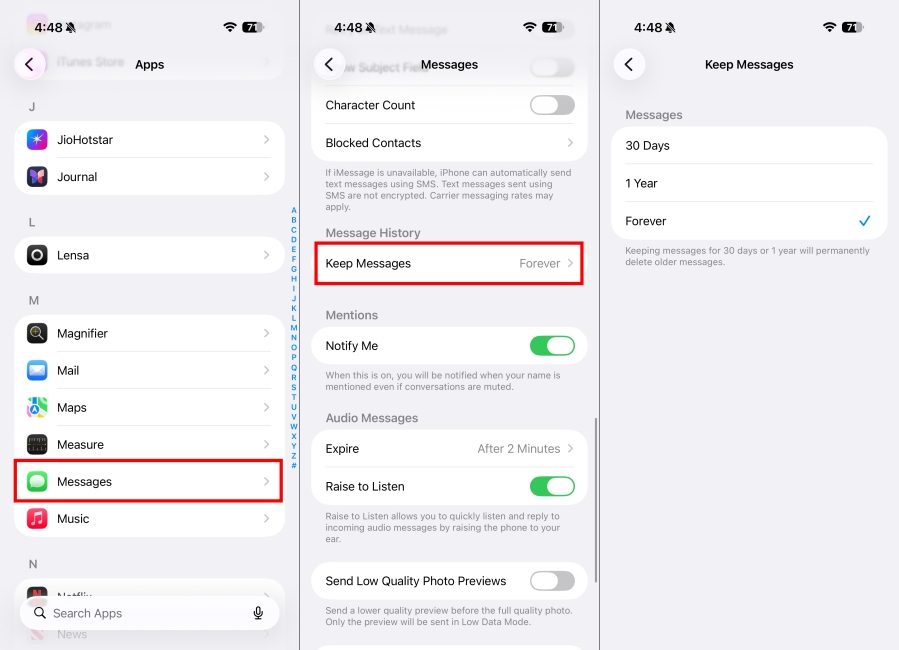
To allow your iPhone to automatically delete older messages, head to Settings > Apps > Messages . Here, tap on Keep Messages and choose from 30 Days, 1 Year, or Forever.
This should help with the iMessage not working issue. But in case you’ve accidentally deleted an important message, here’s how to recover deleted messages on your iPhone.
Advanced Fixes for iMessage Not Working
If the above troubleshooting methods did not solve the iMessage not working issue, then the problem could be more serious than expected. In this situation, you can try out these advanced methods to get iMessage back up and running again.
Sign in to iMessage again
If the above methods didn’t help, there might be an issue with your Apple account. This could be why your iMessage is acting up. To fix this, you need to sign out of iMessage and sign in again. Make sure you have your Apple ID password for this step. If you don’t remember it, here’s how to reset your Apple ID password.
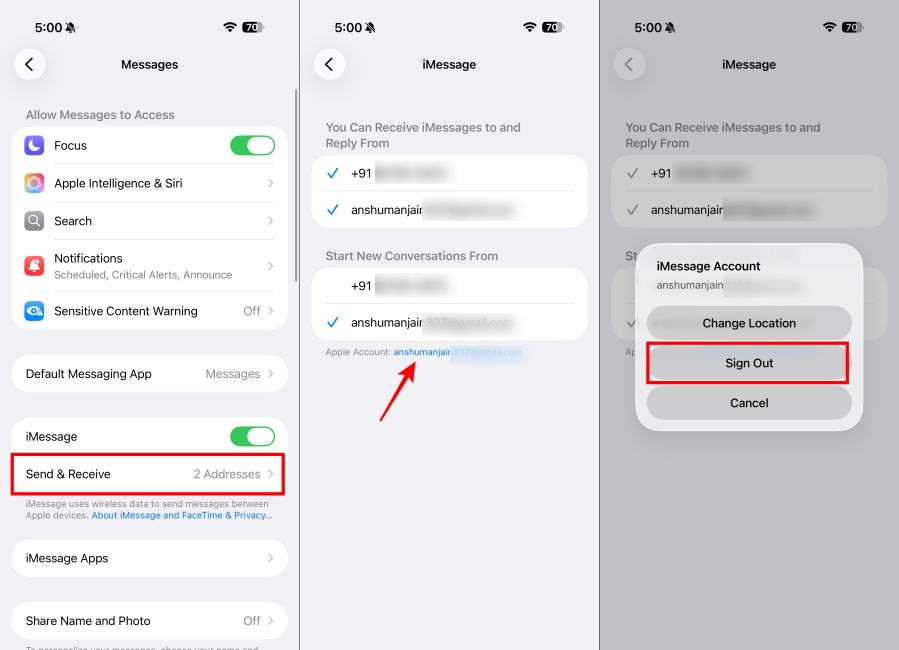
- On your iPhone, go to Settings > Apps > Messages and tap Send & Receive.
- Next up, tap Apple Account: (your Apple ID) and choose Sign Out .
- Now, sign in again and see if the iMessages not working issue is fixed.
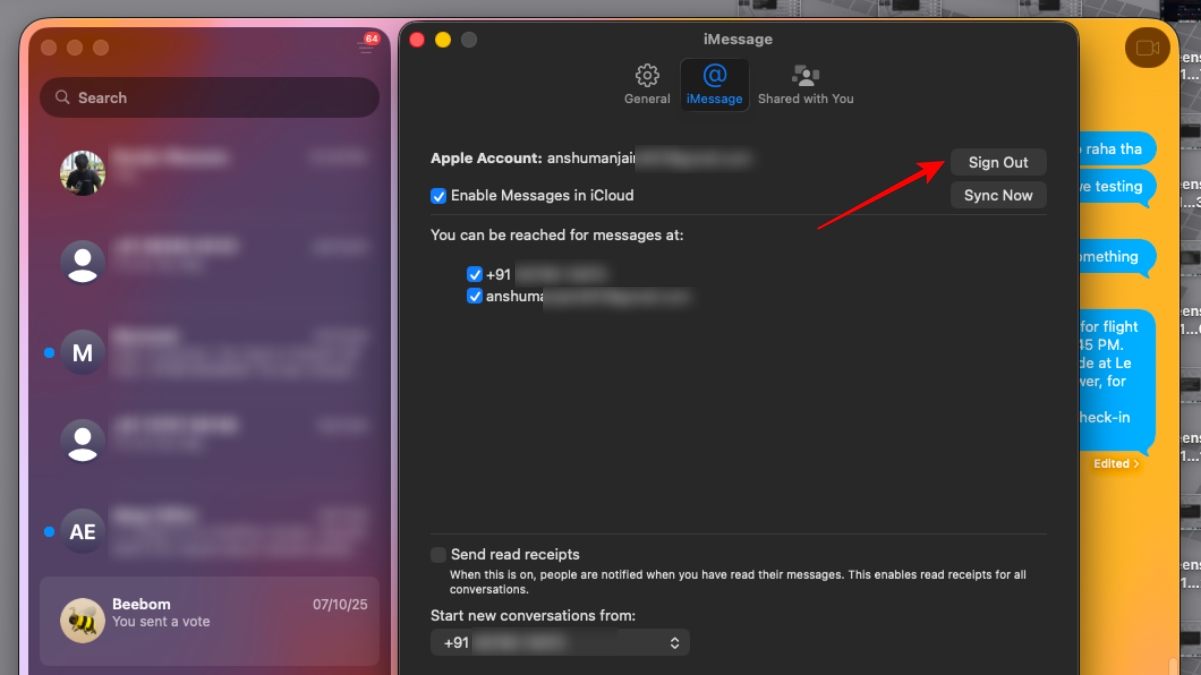
Mac users can follow the steps below to sign out and back into iMessage:
- Open the Messages app , and go to Messages > Settings .
- Then, navigate to the iMessage tab and choose Settings.
- Next, click on Sign Out option.
- When prompted to confirm your decision, click on Sign Out .
- On the login screen, confirm your Apple ID, enter the password, and choose Next.
Check for software updates
An older software version might stop your iMessage from working properly. So, if your iPhone can’t send iMessages or you can’t receive iMessages on your Mac, you should check if your device is running the latest version of the software.
- On your iPhone, iPad, or Mac, go to Settings > General > Software Update .
- If any updates are available, tap on Update Now .

Reset Network Settings and Reboot your Device
One of the best troubleshooting tips to fix the iMessage not working problem is to reset network settings on your iPhone or iPad , and restart the device. This should be your last resort, as it will forget all your saved Wi-Fi passwords and Bluetooth devices. But it could also give a fresh start to everything, fixing the iMessage problem.
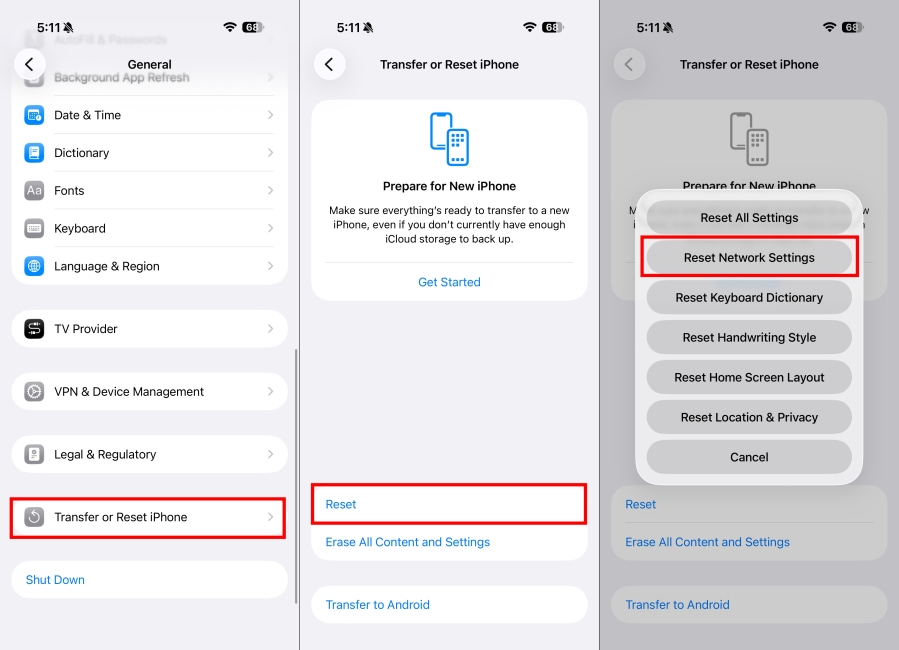
- Go to Settings > General > Transfer or Reset iPhone .
- Here, tap on Reset and select Reset Network Settings .
- Once the reset process completes, go to Settings > Apps > Messages .
- Turn off the iMessage toggle.
- Now, turn off your iPhone or iPad . Desktop users need to restart their Mac system .
- Wait for a few seconds and then turn it on. Next, turn on iMessage again and see if it is working.
Contact Apple
If you’ve tried all the troubleshooting steps but iMessage is still not working for you, it might be time to visit the Apple store. Something might be severely wrong with your device or the internal components. In such cases, the best is to seek Apple support and get your device diagnosed by geniuses. To avoid any further damage, stay away from any cheap alternatives or DIYs.
Did iMessage Start Working For You Again?
One of the most common reasons for your iMessage not working is if you are having internet connection issues. Check if you are connected to the internet in the first place, and that your WiFi or mobile data is not down. An outdated OS version can also be the issue, so check for software updates and update your iPhone to the latest version.
Green text messages on iMessage indicate that either you are not connected to the internet, or that you are. This can happen in a number of instances, like when your or the recipient’s phone is switched off. Your texts also appear green if they are being sent to an Android device. In these cases, since your texts are automatically being sent as SMSes and not as iMessages, they appear green.
To reset or reactivate your iMessage, head over to Settings > Apps > Messages > turn off iMessage > restart iPhone > turn on iMessage . That should do the trick.
Kanika has been a loyal iPhone user since 2014 and loves everything Apple. With a Master’s in Computer Applications, passion for technology, and over five years of experience in writing, she landed at Beebom as an Apple Ecosystem Writer. She specializes in writing How To’s, troubleshooting guides, App features, and roundups for Apple users to help them make the best use of their gadgets. When not writing, she loves to try out new recipes and enjoy some family time.
Add new comment
Name
Email ID
Δ


- Apple and Google have officially confirmed their team-up for the next-gen Siri AI.
- The Cupertino Giant will be using Google’s Gemini for a more personalized Siri model as well as Apple Intelligence features.
- We can expect the next-gen Siri to come out with iOS 26.4, sometime in March or April.
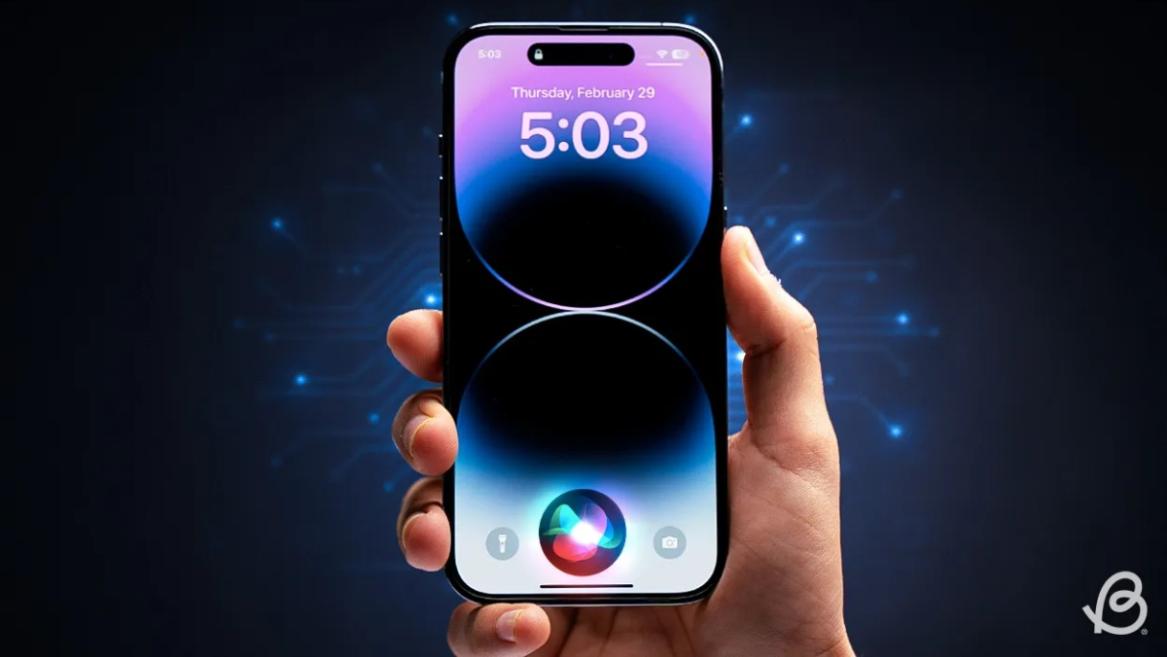
Apple has officially confirmed joining forces with Google to use its Gemini AI model to power the next-generation Siri. It will offer a more personalized experience and will be coming out with the iOS 26.4 update. Apple also plans to leverage Gemini’s capabilities for other Apple Intelligence features as well, later down the line.
The Next-Gen Siri will be powered by Google’s Gemini AI
Apple officially confirmed that it will be partnering with Google in a statement to CNBC . Here’s what it stated, “After careful evaluation, we determined that Google’s technology provides the most capable foundation for Apple Foundation Models, and we’re excited about the innovative new experiences it will unlock for our users.”
Later, Google also shared a post on X confirming the tie-up, “Apple and Google have entered into a multi-year collaboration under which the next generation of Apple Foundation Models will be based on Google’s Gemini models and cloud technology. These models will help power future Apple Intelligence features, including a more personalized Siri coming this year.”
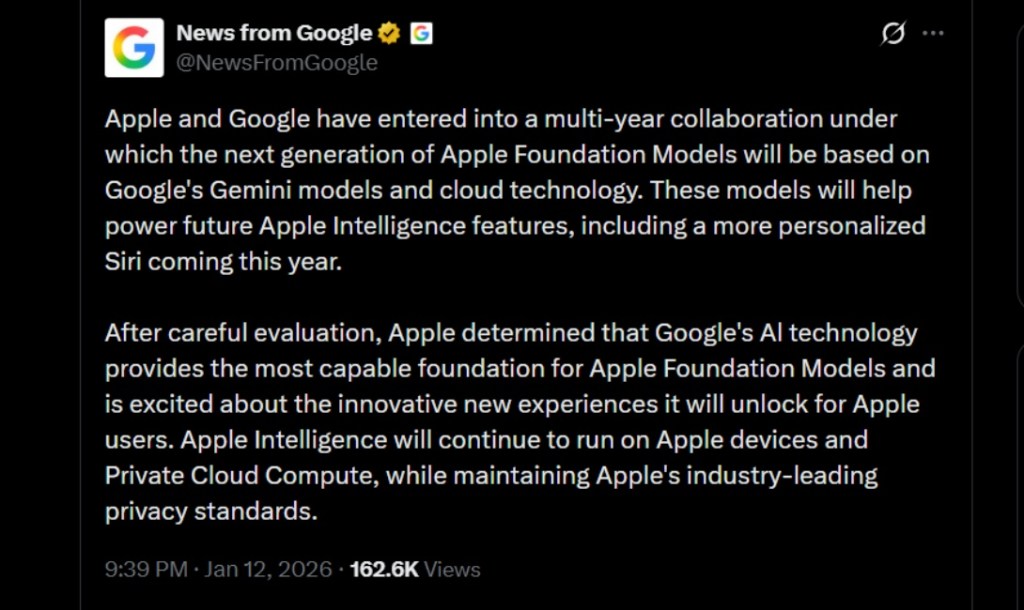
Image Credit: X/@NewsFromGoogle
Both statements clearly mention that the Cupertino Giant will be using Gemini to power its assistant Siri. This was already rumored, as Apple’s attempts to acquire Perplexity went nowhere. With Gemini, Siri will get a major AI update . It will be able to handle more nuanced conversations and provide better results. Something long-time Apple users have been asking for years.
The next-gen Siri will arrive with the iOS 26.4 update, which will launch sometime in March or April. And it is only going to be available for Apple Intelligence-supported devices .
Something else worth noting is how Google’s statement mentions that Gemini will power Apple Intelligence features. This leads us to believe that Apple could use Gemini’s multi-modal capabilities for its Writings tools , Image Playground , and Message summaries, too.
Elon Musk Not Happy With Apple and Google Tie Up
xAI CEO Elon Musk also responded to Google’s announcement post on X, sharing his thoughts on the matter by saying, “This seems like an unreasonable concentration of power for Google, given that they also have Android and Chrome.” Though we don’t expect either Apple or Google to respond to Elon, we will update the situation as it progresses.
It is worth noting that xAI is the company behind Grok, which is in hot water currently due to its inappropriate image generation fiasco , and has been getting backlash from multiple news outlets, X users, and even government authorities.
With over 4 year of experience under the belt, I cover all facets of consumer tech, from smartphones to other consumer electronics, our favorite social media apps, as well as the growing realm of AI and LLMs. As an Apps and AI writer app Beebom, I provide my expertise in all these areas, weaving stories that help you get familiar with the tech around you. But you will find me playing NYT daily puzzles in my free time.
Add new comment
Name
Email ID
Δ
