- Microsoft has made it much harder to uninstall Edge from Windows but, there is a nifty way to completely remove it.
- You can use the Wise Uninstaller program and navigate to Microsoft Edge > Force uninstall > Yes, to delete the browser permanently.
- Additionally, you will need to use Windows Settings and Registry Editor to prevent Microsoft from reinstalling Edge again.
Microsoft has lately become quite aggressive in pushing Edge on Windows 11 and 10, almost nagging users with malware-like pop-ups to switch from Chrome. Even if you have set Chrome as your default browser, Microsoft doesn’t respect the choice and redirects system and app links to Edge. So if you want to permanently uninstall Microsoft Edge from your Windows PC, we have come up with a working tutorial. We have also added a nifty way to prevent Microsoft from reinstalling Edge.
Note: Make sure you have installed Chrome or your choice of browser on your PC before attempting to uninstall Edge.
How to Uninstall Microsoft Edge on Windows 11
I tried multiple ways to remove Microsoft Edge from my Windows 11 PC running the latest 24H2 build, but all went in vain. No Command Prompt trick , PowerShell script, or Registry tweaks worked. Finally, Wise Uninstaller came to the rescue and it works great. You can use the program to permanently remove Edge from your system. Here are the steps to follow.
- Before making any system-level changes, I always recommend users to create a system restore point . It can restore your PC to an earlier working state in case things go south.
- Once you have done that, download and install Wise Uninstaller ( website ). Rest assured, the app is free and there is no bloatware associated with it.
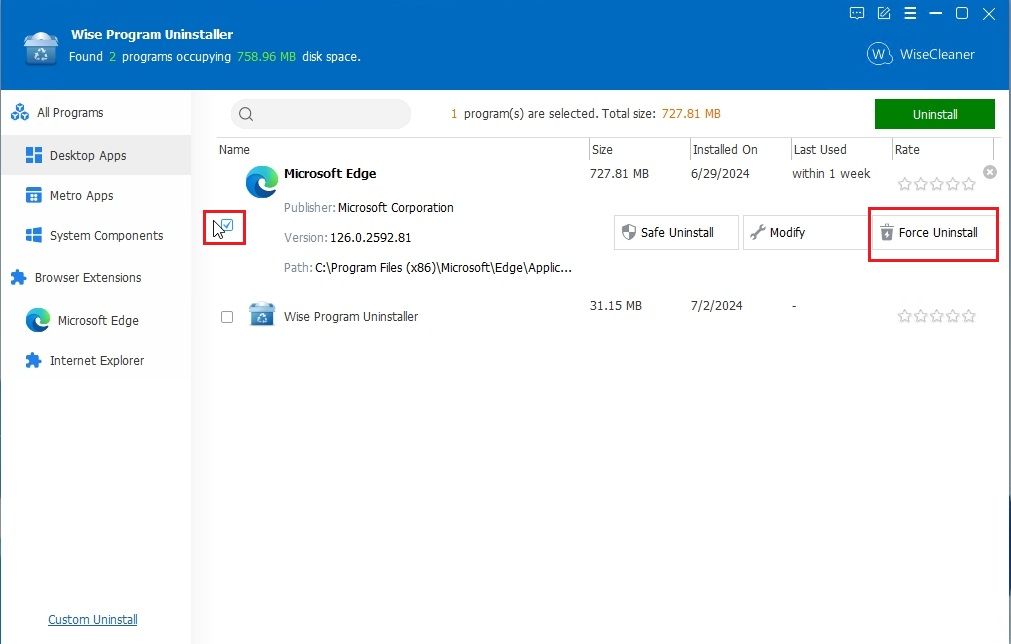
- Now, simply launch the Wise Uninstaller program. Here, select Microsoft Edge and click on Force Uninstall . Before proceeding, make sure you have installed Chrome or your preferred browser on your PC.
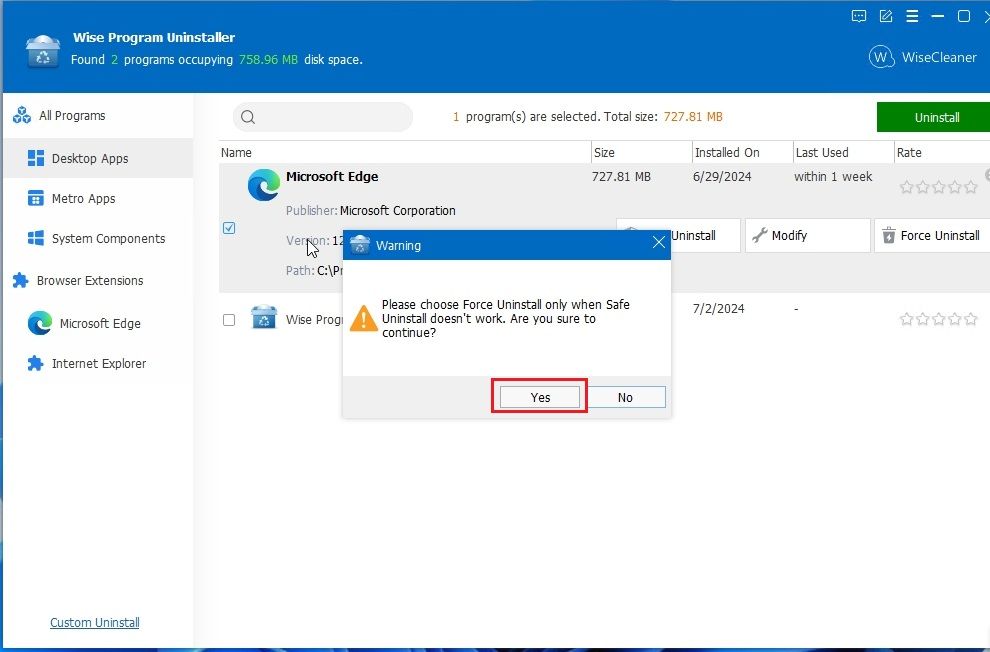
- Next, click on Yes . It will start scanning Edge and look for associated files and Registry entries.
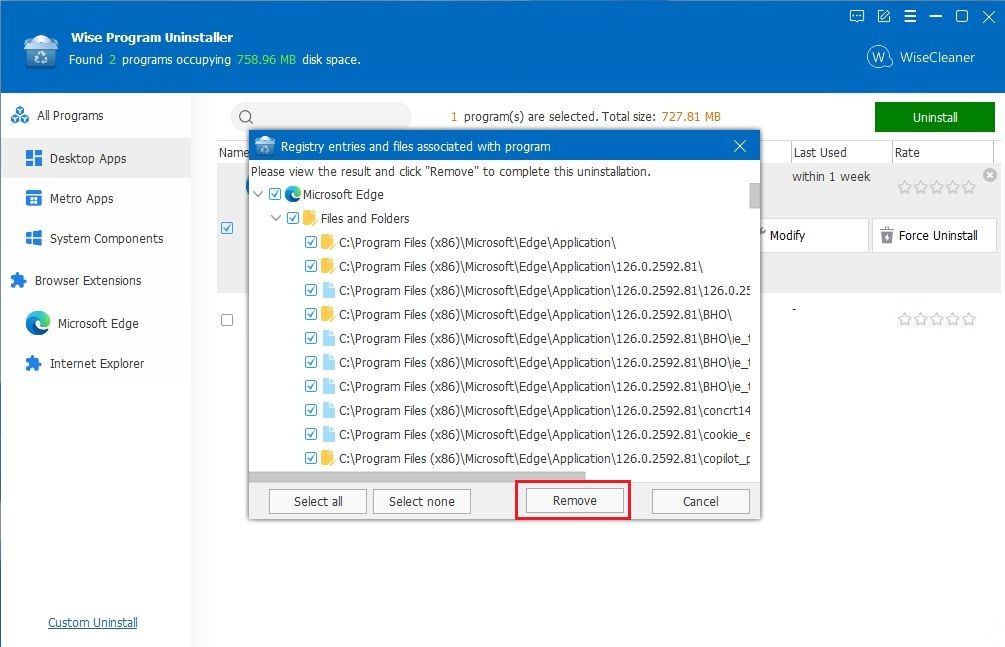
- Now, simply click on Remove . It will take some time to uninstall Microsoft Edge from your Windows PC.
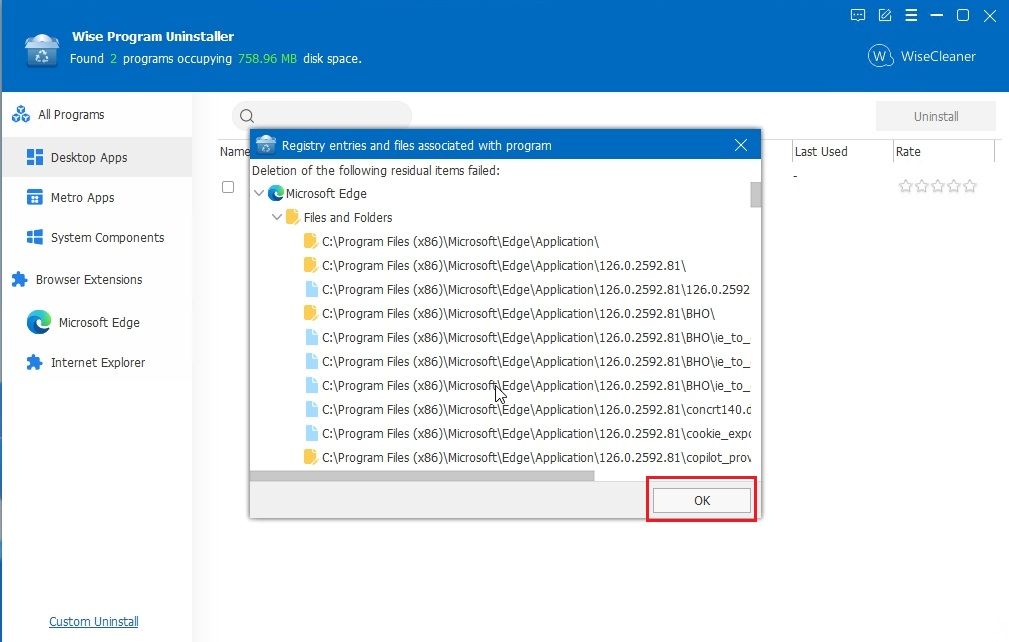
- Finally, click on OK . Now, close the app and restart your PC.
- You will find that Microsoft Edge is completely uninstalled from your PC.
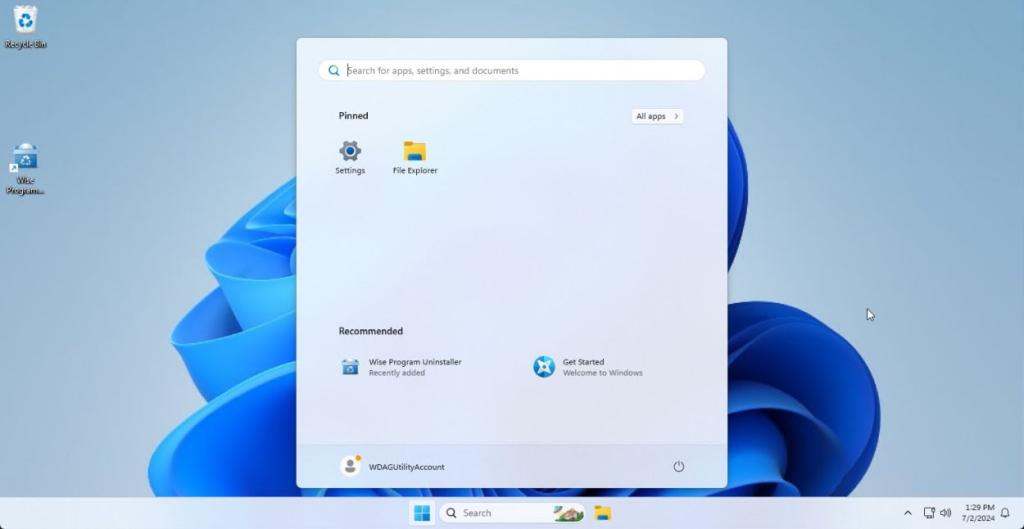
How to Uninstall Microsoft Edge: Prevent Edge Reinstallation
While the above steps can help successfully delete Edge, you will need to prevent Microsoft from reinstalling it again. Here’s how you do it.
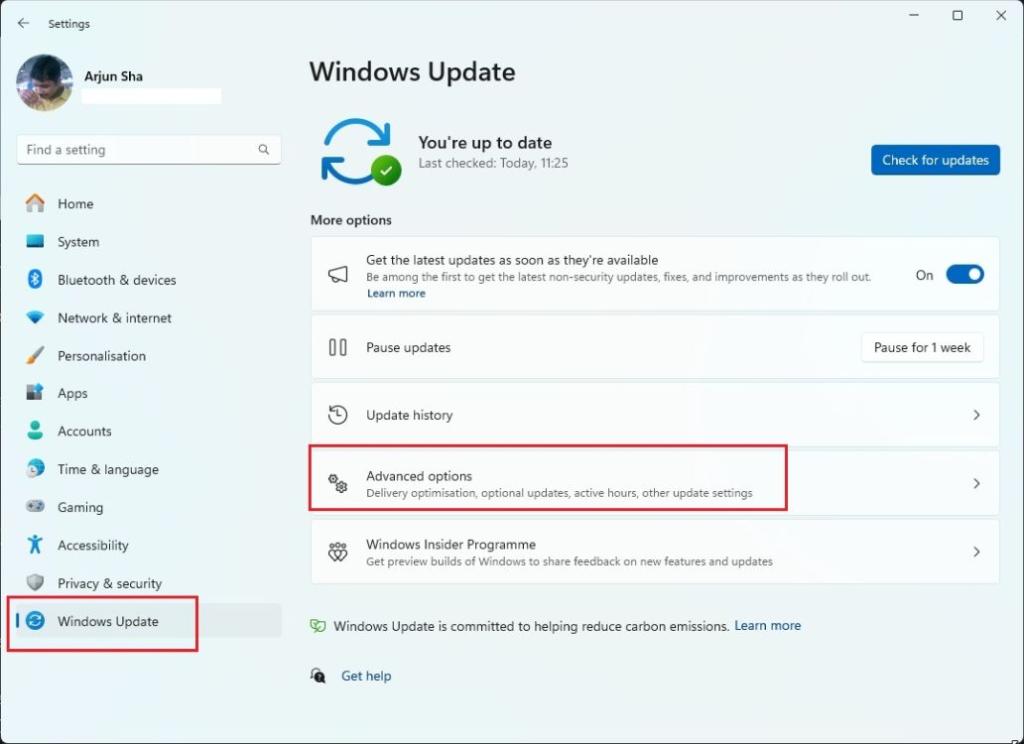
- First, open Windows Settings using the Windows + I keyboard shortcut.
- Here, navigate to Windows Update > Advanced options .
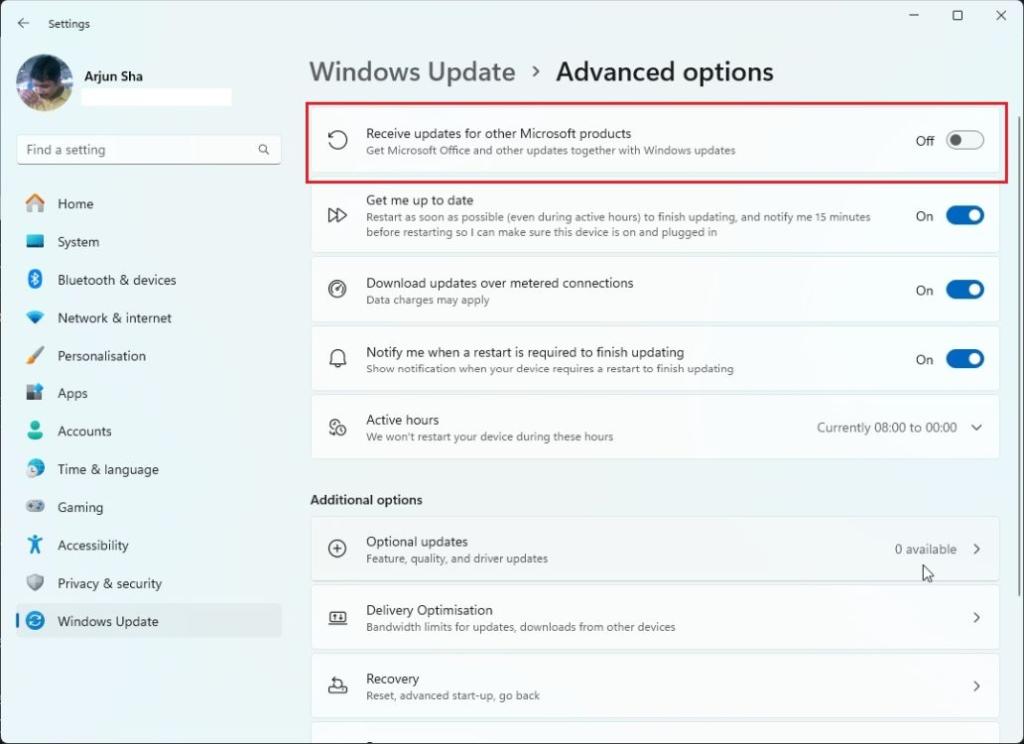
- Now, turn off the Receive updates for other Microsoft products toggle. This will prevent Microsoft from downloading and reinstalling Edge on your PC.
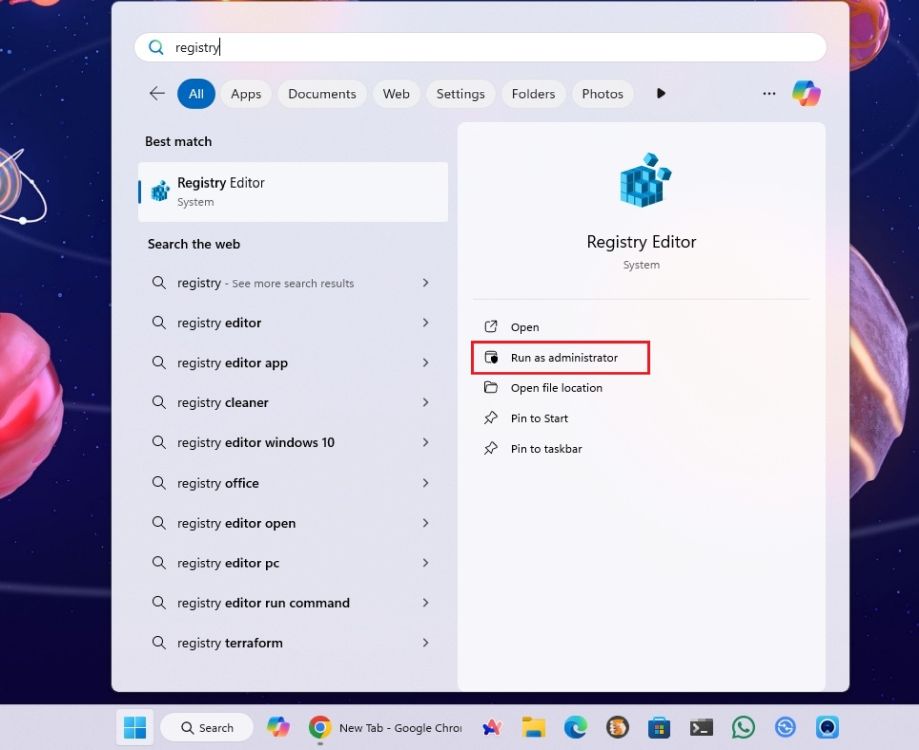
- After that, open the Start Menu , and search for “registry”. With the Registry Editor selected, click on Run as administrator .
- Now, paste the below path into Registry’s address bar and hit the Enter key.
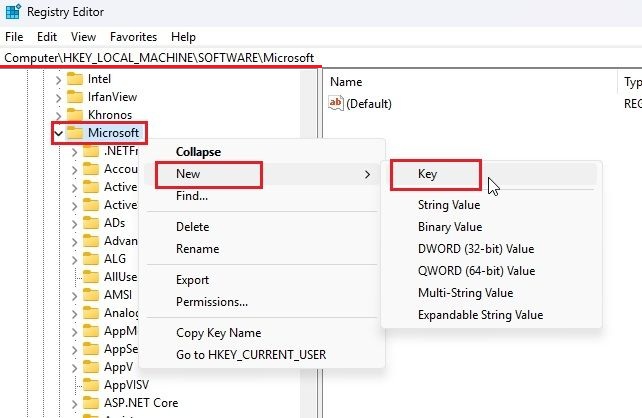
Computer\HKEY_LOCAL_MACHINE\SOFTWARE\Microsoft
- Next, right-click on the Microsoft folder and select New > Key .
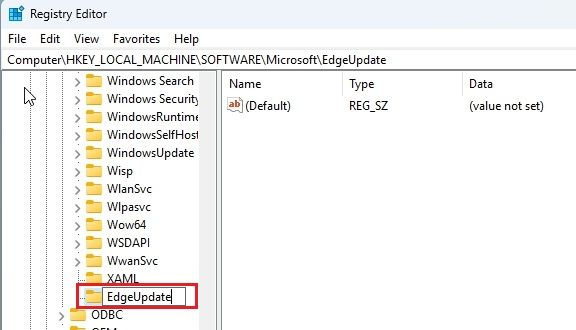
- Name this key as EdgeUpdate .
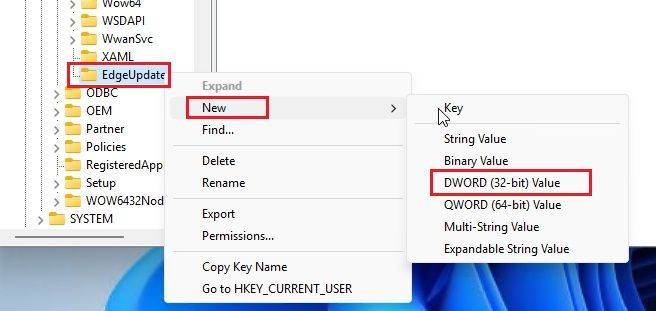
- Now, right-click on the newly-created EdgeUpdate key and go to New > DWORD (32-bit) Value .
- Now, name this – DoNotUpdateToEdgeWithChromium .
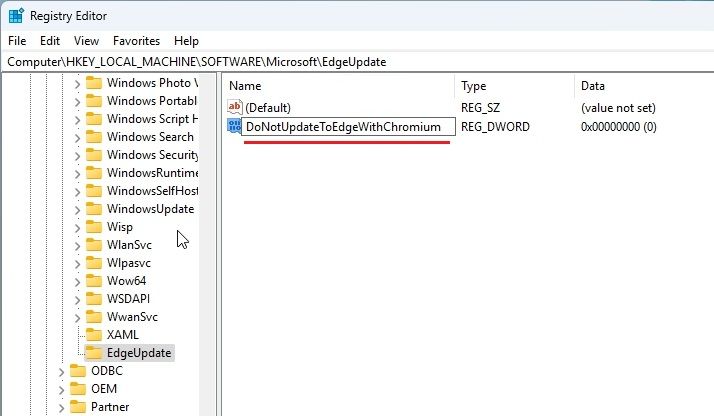
- Double-click on this file and change the value inside “Value data” to 1 .
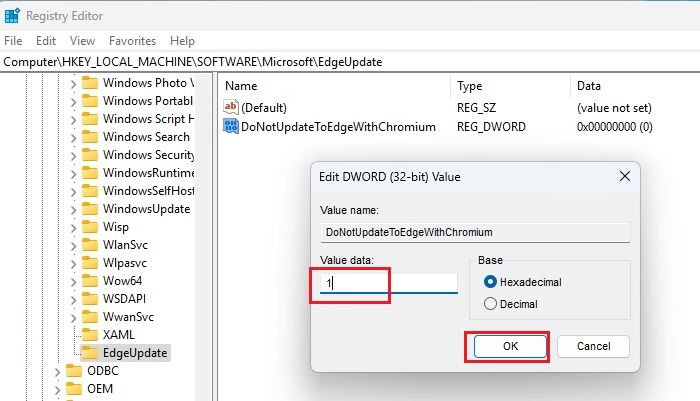
- Now, close the Registry Editor window and restart your PC.
It should now prevent Microsoft from reinstalling Edge on your PC. Keep in mind, with future annual updates, Edge may be reinstalled again. In that case, you will have to repeat the same steps again.

Passionate about Windows, ChromeOS, Android, security and privacy issues. Have a penchant to solve everyday computing problems.
Add new comment
Name
Email ID
Δ

Microsoft is celebrating its 50th anniversary at a time when technology is about to reshape the world. Founded by Bill Gates and Paul Allen in a small rented office in Albuquerque, Microsoft is now the world’s second most valuable company. Over the past 50 years, the software giant has faced many challenges, antitrust lawsuits, and fierce competition, but can it stay ahead in the next five decades? To understand what the next 50 years hold for Microsoft, read on.
What Microsoft’s History Tells Us About the Next 50 Years
Microsoft started as a small company in 1975, developing software for the Altair 8800 — an early personal computer. By 1980, Microsoft needed an operating system to power the IBM PC. So, it acquired 86-DOS and modified it to MS-DOS. MS-DOS became massively popular and by 1985, Microsoft launched its first graphical operating system called Windows 1.0.

Paul Allen and Bill Gates in 1981 | Image Credit: Microsoft
10 years later, in 1995, Microsoft released Windows 95 which was a huge commercial success. For the first time, Microsoft introduced the Start menu, Taskbar, and Windows Explorer. They are still part of the latest Windows 11 OS, even after 30 years.
Following that, Microsoft launched Windows XP, Xbox, and the Office suite, which expanded its footprint in the PC space. Now, 50 years later, Windows has a desktop market share of over 70% , maintaining its position as the dominant OS. In these last 50 years, Microsoft has diversified its business to cloud computing (Azure), gaming (Xbox), productivity (Microsoft 365), and its next big thing – Copilot AI.
Beyond being a consumer-centric company, Microsoft has become a massive corporation that provides its services to enterprise customers as well. In fact, today, Microsoft’s revenue mostly comes from Azure’s cloud infrastructure and AI services. Meanwhile, the remaining revenue comes from Microsoft 365, Windows, and Xbox.
The only major space where Microsoft doesn’t have a footprint is mobile. Windows Phone exited the smartphone OS market in 2020. Bill Gates recently admitted that losing the phone market to Android was his “greatest mistake”. Besides that, Microsoft in 2025 announced that it’s quitting the HoloLens hardware business completely, ending its Mixed Reality vision.
Microsoft’s Role in AGI Development
When Satya Nadella took over Microsoft as the CEO in 2014, the Redmond giant was not in good shape. Nadella ended several struggling projects like the Windows Phone. And focused on its server businesses like Azure cloud, AI, enterprise solutions, and developer relations. As a result, Microsoft has become the world’s second most valuable company by market cap, joining the $3 trillion club in market valuation recently.
The credit largely goes to Satya Nadella for transforming Microsoft in the last decade. Many credit Nadella’s leadership for striking a deal with OpenAI back in 2019. Microsoft invested $1 billion in OpenAI to support the development of AGI (Artificial General Intelligence) — an AI system capable of matching human capabilities.

Image Credit: OpenAI via YouTube
So far, Microsoft has invested close to $14 billion in OpenAI and has a 49% ownership stake in the company. This has put Microsoft at the forefront of AI development. The partnership allows Microsoft to exclusively access OpenAI’s latest breakthroughs and AI models. It can also commercialize OpenAI’s models. Thus, allowing the company to integrate the latest AI models into its products. Like Copilot, Microsoft 365, and Azure AI for enterprise offerings.
Not only that, the terms of the partnership say that OpenAI must use Microsoft Azure for all cloud infrastructure needs. Only recently, Microsoft relented and allowed OpenAI to purchase cloud resources from Oracle. Some reports also say that OpenAI has to share 75% of its revenue with Microsoft until the investment is recovered.

Image Credit: Beebom
It means that Microsoft has a huge financial influence over OpenAI’s operations. And in the future, Microsoft will gradually recover its investment while having access to the latest AI technologies. Having said that, the partnership also says that once OpenAI achieves AGI internally, Microsoft will lose access to OpenAI’s technologies.
To keep its lead in the AI race, Microsoft is putting its AI division in order. Microsoft is reportedly developing internal reasoning models to reduce its over-reliance on OpenAI. The company has already trained smaller models such as Phi for everyday use and Muse AI for generating gaming visuals.
Microsoft is also focusing on open-source models including China’s DeepSeek which shocked the world with its efficient training methods. Overall, Microsoft is currently a key player in AI development, leveraging its partnership with OpenAI and developing in-house AI models as well. Until AGI is achieved, expect Microsoft to continue its lead in the AI race.
Microsoft’s Next 50 Years: Future of Windows
While Windows doesn’t directly contribute major revenue for Microsoft through licensing, the platform serves as the foundational bedrock, powering its software, cloud, and enterprise services. On the consumer side, Windows 11 is the latest desktop OS by Microsoft, and it’s evolving into a great operating system. Microsoft is slowly but gradually improving the design language of Windows 11 to offer a consistent PC experience.

Image Credit: Microsoft
Microsoft is putting effort into making Windows 11 a more modular OS . We have already seen that Windows 11’s various elements such as the desktop shell, Taskbar, Notification Center, etc. are being decoupled from explorer.exe to make each component modular and updatable. Microsoft has already showcased Windows 10X (now canceled) which was based on a highly-modular Windows Core OS .
In the future, we might see different flavors of Windows running on various form factors such as foldable devices, tablets, and more. It’s being said that Windows 12 should come with a floating Taskbar and a new modular desktop interface, optimized for touchscreen devices.
Apart from UI/UX improvements, Microsoft is also adding a lot of AI features to Windows 11. Besides current AI features on Windows 11 such as Recall, Semantic Search, Cocreator, etc., the future of Windows lies in Agentic AI -driven integration. Copilot on Windows will be able to perform actions in real-time using the vision capability. Users will be able to voice chat with Copilot and ask it to perform actions on their Windows PCs.
To enable this, Microsoft is already preparing agentic frameworks for Windows like OmniParser, Magentic-One, AutoGen, and Windows Agent Arena to handle complex tasks. While some companies are bringing AI agents to the web browser, Microsoft is taking it to the OS level so that it can perform both system-level and web-based actions . Basically, in the future, you can expect that Windows will become an AI-driven operating system.
To leverage AI for gaming, Microsoft has already showcased its Muse AI model that can generate game visuals and controller actions. It’s quite possible that Generative AI will be tightly integrated into Xbox to enable features such as AI-assisted gameplay, environment generation, personalized experiences, and more.
Microsoft’s In-house Chips and Quantum Computing
Besides software, on the hardware side too, Microsoft is preparing for the future and reducing its reliance on Nvidia . In 2023, Microsoft announced its custom Azure Maia 100 chip for AI workloads. While Google has its own TPU for AI workloads, and Nvidia continues to sell GPUs for AI training and inference, Microsoft needed an in-house chip , hence, Maia 100 was born. It’s an AI accelerator that can run large-scale AI workloads on Azure’s cloud.
The company also announced an Arm-based Azure Cobalt CPU for general-purpose compute workloads, just like Google’s Axion CPU. Since Microsoft has a major cloud business, the chip is going to reduce datacenter costs for Microsoft and cut down dependency on external vendors like Nvidia and Intel.

Majorana 1 | Image Credit: Microsoft
Finally, in February 2025, Microsoft announced its first breakthrough in quantum computing . The company unveiled Majorana 1, a quantum computing chip for quantum computers. Unlike traditional qubits, Majorana 1 uses topological qubits which are said to be more stable and less prone to errors.
For this, Microsoft invented a new class of materials called “topoconductors”. Microsoft claims that Majorana 1 can scale up to 1 million qubits on a single chip. Overall, Microsoft is doing pioneering work in the field of quantum computing while also developing in-house chips to reduce reliance on external vendors.
And as a software-first company, Microsoft is entering the AI era with high expectations, which has the potential to transform its entire ecosystem including Windows, Xbox, Azure, and Microsoft 365. In the next 50 years, we expect Microsoft to lead the industry with fresh innovations, but can it outpace Google and Apple? Only time will tell.
Passionate about Windows, ChromeOS, Android, security and privacy issues. Have a penchant to solve everyday computing problems.
Add new comment
Name
Email ID
Δ
