
- Apple has released two new iPads: the iPad Air with an M3 chip and the 11th-gen iPad with an A16 Bionic processor.
- The iPad Air features a 20% performance boost and a new Magic Keyboard accessory.
- Pricing starts at $599 for the 11th-gen iPad and $799 for the 13-inch iPad Air.
After the disappointing release of the latest iPhone 16e with its more-than-average asking price, Apple is refreshing its iPad lineup by launching the new iPad Air, which has received a spec bump to the M3 processor and a new Magic Keyboard accessory to go along with it. Along with this, they are also releasing the 11th-generation iPad with an A16 Bionic CPU. Let’s take a quick look at their specs and pricing.
Apple iPad Air (M3) and Magic Keyboard
Aside from the M3, the new iPad Air doesn’t seem to feature any major differences from the previous year’s model. It comes with the same 11 and 13-inch sizes and comes with a 12MP center stage selfie camera at the front. On the back, there’s a 12MP wide-angle camera that supports 4K recording at 60FPS.

The new processor should give the iPad a 20% improvement in performance with its 8-core CPU and 9-core GPU architecture. This can be quite helpful in pushing more FPS in high-end games and improving graphics quality. The tablet also comes with Apple Intelligence support on board.
Other features include a Touch ID power button, a USB type-C port with 10 Gbps data transfer speeds, Wi-Fi 6E, and Bluetooth 5.3.

Talking about the new Magic Keyboard, Apple has increased the trackpad area and added function keys at the top. This makes it easy to manage brightness and volume right from the keyboard. Its magnetic connector directly attaches to your iPad Air and pulls power through the tablet without the need for Bluetooth. It also comes with USB type-C port to charge other accessories via pass-through.
Apple iPad 11th Gen

Like the new iPad Air, Apple has also gone ahead and upgraded the internals of their 10th-generation iPad and called it a day. The iPad 11th gen now comes with an A16 Bionic processor, ditching the previous A13. According to the company, this should result in up to 50% improvements in performance. It should also help deliver better battery efficiency.
Apart from this, the new iPad 11th gen now starts at 128GB base storage , finally getting rid of the 64GB option. The rest of the specs remain pretty much identical, with an 11-inch Liquid Retina display, 12MP Wide camera rear shooter with 4K 60FPS video recording, 12MP front Center Stage camera, USB type C port, Wi-Fi 6, Bluetooth 5.3 and Touch ID power button.
Pricing and Availability
The new iPad Air (M3) is available in Wi-Fi only and Wi-Fi + Cellular models, ranging from 128GB to 1TB storage options. The price for the 11-inch model starts at $599 , and it is available for pre-order, with the sale starting on March 12th. The 13-inch model on the other hand starts at $799.
The new Magic Keyboard is available for purchase at $269 for the 11-inch iPad Air, and $319 for the 13-inch option.
Finally, you can also Pre-order the 11th Gen iPad with A16 starting from $349 for the Wi-Fi variant and $499 for the cellular option. It is available in Blue, Pink, Yellow, and Silver colors, same as the old one. All these devices can be picked up from the official Apple Store website, or other online outlets and retailers.

With over 4 year of experience under the belt, I cover all facets of consumer tech, from smartphones to other consumer electronics, our favorite social media apps, as well as the growing realm of AI and LLMs. As an Apps and AI writer app Beebom, I provide my expertise in all these areas, weaving stories that help you get familiar with the tech around you. But you will find me playing NYT daily puzzles in my free time.
Add new comment
Name
Email ID
Δ

- Apple’s upcoming iPhone 17 Pro Mac is set to get a “metalens” technology for Face ID.
- This tech will equip an optical lens with microscopic nano-structures to control light, thus resulting in a smaller Dynamic Island.
- The new Face ID technology will also arrive on the next generation of iPad Pro models, as well as the “folding iPad”.
We’re six months past the release of the iPhone 16 series, and as is the case, all eyes are set on the upcoming lineup. We know Apple has prepared substantial changes in the iPhone 17 lineup, with plans to refresh the overall design and camera setup . Then, there’s the much-anticipated release of the iPhone 17 Slim (or Air) that could be Apple’s ultra-premium iPhone yet. We now have new information on the iPhone 17 Pro Max, and it’s regarding the Dynamic Island it’s going to come with.
As per renowned leaker Digital Chat Station ( via Weibo ), Apple’s upcoming Pro Max model could use a new “metalens” technology for Face ID. This new tech will integrate both the transmitter and receiver elements in one. It’ll thus minimize the size of the Face ID components at the top of the iPhone. This change should result in a smaller Dynamic Island on the iPhone 17 Pro Max display.

This new metalens tech will essentially be an optical lens with microscopic nano-structures. It would be able to manipulate light , unlike the curved lenses on the current set of iPhones. The reduction is size owes to the optical lens itself, which is lightweight and can be flat in nature.
The leaker also revealed that this upcoming Face ID tech will become available on the next line of iPad Pro models, as well as the “ folding iPad “. The latter could be regarding Apple’s potential foldable iPhone , which we haven’t heard anything about recently.
Ultimately, Apple could be preparing to move all of its Face ID tech under the display. Similar to front cameras on phones like Samsung’s Z Fold 6. However, such a change could take years to perfect, and we might still be a few generations away.
If this report turns out to be true, it’ll be the first time in three years that the Dynamic Island gets a refresh. The display cutout has more-or-less remained the same since it debuted on the iPhone 14 Pro.
The iPhone 17 Pro models are expected to feature the same aluminum frame as the standard versions. Its cameras will take on the same design choices, with a rectangular camera bump on an aluminum encasement. The cameras themselves will get a major upgrade, all three lenses will feature 48MP sensors.

Ajaay’s love affair with technology started young, with the Nokia N-Gage piquing his interest. Since 2016, he’s channeled his passion for tech into crafting explainers and guides on iOS, macOS, Android, social media, privacy & cybersecurity, and AI. When it’s time to unplug, Ajaay enjoys playing EAFC, unwinding to music on a pair of open-backs, building his dream audiophile gear, or watching Arsenal struggle to keep a clean sheet.
Add new comment
Name
Email ID
Δ
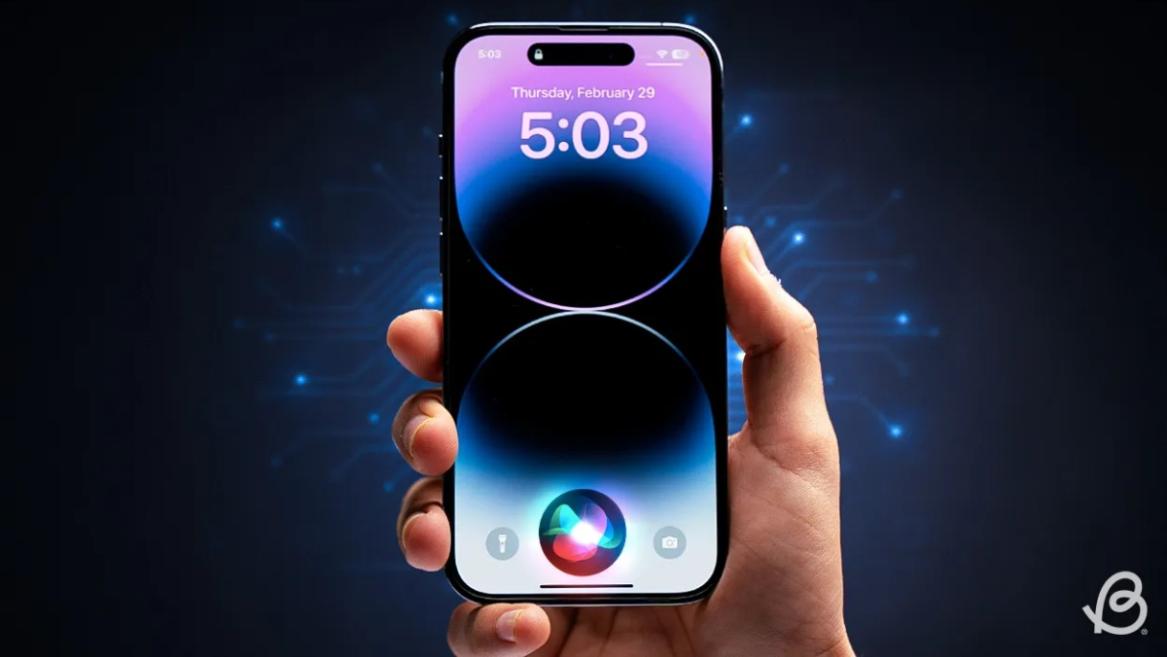
- Apple and Google have officially confirmed their team-up for the next-gen Siri AI.
- The Cupertino Giant will be using Google’s Gemini for a more personalized Siri model as well as Apple Intelligence features.
- We can expect the next-gen Siri to come out with iOS 26.4, sometime in March or April.
Apple has officially confirmed joining forces with Google to use its Gemini AI model to power the next-generation Siri. It will offer a more personalized experience and will be coming out with the iOS 26.4 update. Apple also plans to leverage Gemini’s capabilities for other Apple Intelligence features as well, later down the line.
The Next-Gen Siri will be powered by Google’s Gemini AI
Apple officially confirmed that it will be partnering with Google in a statement to CNBC . Here’s what it stated, “After careful evaluation, we determined that Google’s technology provides the most capable foundation for Apple Foundation Models, and we’re excited about the innovative new experiences it will unlock for our users.”
Later, Google also shared a post on X confirming the tie-up, “Apple and Google have entered into a multi-year collaboration under which the next generation of Apple Foundation Models will be based on Google’s Gemini models and cloud technology. These models will help power future Apple Intelligence features, including a more personalized Siri coming this year.”
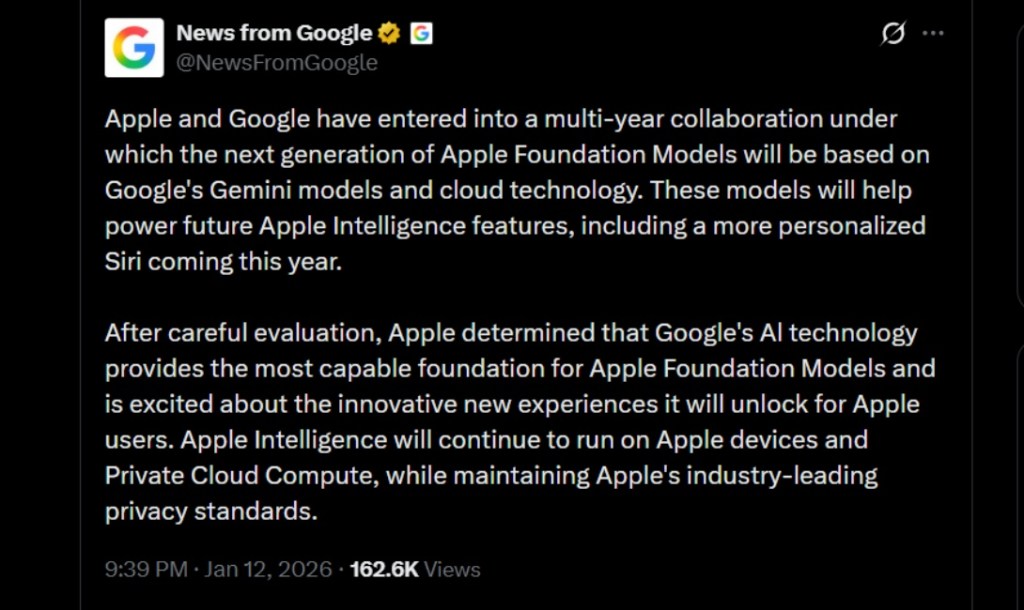
Image Credit: X/@NewsFromGoogle
Both statements clearly mention that the Cupertino Giant will be using Gemini to power its assistant Siri. This was already rumored, as Apple’s attempts to acquire Perplexity went nowhere. With Gemini, Siri will get a major AI update . It will be able to handle more nuanced conversations and provide better results. Something long-time Apple users have been asking for years.
The next-gen Siri will arrive with the iOS 26.4 update, which will launch sometime in March or April. And it is only going to be available for Apple Intelligence-supported devices .
Something else worth noting is how Google’s statement mentions that Gemini will power Apple Intelligence features. This leads us to believe that Apple could use Gemini’s multi-modal capabilities for its Writings tools , Image Playground , and Message summaries, too.
Elon Musk Not Happy With Apple and Google Tie Up
xAI CEO Elon Musk also responded to Google’s announcement post on X, sharing his thoughts on the matter by saying, “This seems like an unreasonable concentration of power for Google, given that they also have Android and Chrome.” Though we don’t expect either Apple or Google to respond to Elon, we will update the situation as it progresses.
It is worth noting that xAI is the company behind Grok, which is in hot water currently due to its inappropriate image generation fiasco , and has been getting backlash from multiple news outlets, X users, and even government authorities.
With over 4 year of experience under the belt, I cover all facets of consumer tech, from smartphones to other consumer electronics, our favorite social media apps, as well as the growing realm of AI and LLMs. As an Apps and AI writer app Beebom, I provide my expertise in all these areas, weaving stories that help you get familiar with the tech around you. But you will find me playing NYT daily puzzles in my free time.
Add new comment
Name
Email ID
Δ
