Apple just announced their latest, most economical smartphone, and it’s not an iPhone SE. Yeah, while the whole world was drawn to think that we’ll be seeing the 4th generation of the SE series, Apple did the most Apple thing and pulled the iPhone 16e out of the bag. At $599, the iPhone 16e is the cheapest iPhone out there and sits on the lower-price shelf alongside the iPhone 15 which the company still sells for $699. For that price, I’d recommend you get the iPhone 15 over the new iPhone 16e. Here’s why I think so.
Why Should You Buy an iPhone 15 over the iPhone 16e?
Before we get on with the reasons, I’d like to be clear that neither of these phones are straight-up better over the other. They’re just different. The iPhone 15 is the older phone with a slightly-older chipset. And if you’re a Pro-level Apple user, neither of them would do you justice. That said, for most “casual” users, the iPhone 15 offers the more value for money between the two and here’s why you should buy it over the iPhone 16e.
1. Let’s Admit it, Apple Intelligence isn’t Good enough an Upgrade

Ever since the debut of the iPhone 16 series, Apple has been banking on its AI features, like its competitors. At first, it looked quite exciting, as the demos shared by the company made Apple Intelligence appear far superior to other AI implementations. However, as my colleague, Akshay has pointed out , it’s not completely there yet .
Apple generally waits out for any new technology to mature, but its implementation of AI has been anything but mature. I’m not saying it’s downright bad. There are some interesting features like call summaries, notification summaries , and photo editing with Siri. And of these three things, only the first one works. The second one is a work in progress, and the last one isn’t even out yet. You get my point here, don’t you?
Just like the iPhone 16 models, Apple is sticking with the “Built for Apple Intelligence” tag for marketing the iPhone 16e. But, I don’t think Apple’s AI, in its current state, is good enough a reason to get the iPhone 16e over the iPhone 15. Yes, it has got a better chipset that will give you one more year of software support than the latter. But, most of us regular users won’t even notice this difference .
2. A Single Camera in 2025?

Image Credit: Apple
If Apple Intelligence isn’t your primary preference, then it’s all downhill from here. The biggest shortcoming of the iPhone 16e, as you may have guessed by now, is really the camera or the lack of it. Having a single camera at the back is just not enough as per today’s standards. And I believe, no other brand besides Apple would get away with such a thing.
Yes, I know, the iPhone SE 3rd generation did have a single camera. But that launched at $429, three years ago. We are in 2025. There are budget Android phones that offer multiple lenses. So for a phone that retails at $600 to not have even an ultra-wide camera is beyond me. Now, you may argue that we all anticipated this from Apple. Yes, I’d agree. But we did expect a successor to the iPhone SE 3 that we believed would go for $500. Not another iPhone 16 series device that gives Apple a reason to bump up its price.
The new 48 MP is, no doubt, a major upgrade over the previous iPhone SE. But it doesn’t justify the fact that a sub-$600 phone in 2025 doesn’t have an additional camera lens. For just $100 more, the iPhone 15 gives you an extra ultra-wide camera with sensor-shift optical image stabilization . The latter has been part of iPhones since the iPhone 12 Pro Max and uses your phone’s gyroscope to reduce lens distortion and blur in low-light mode. For context, the iPhone 16e only comes with OIS.
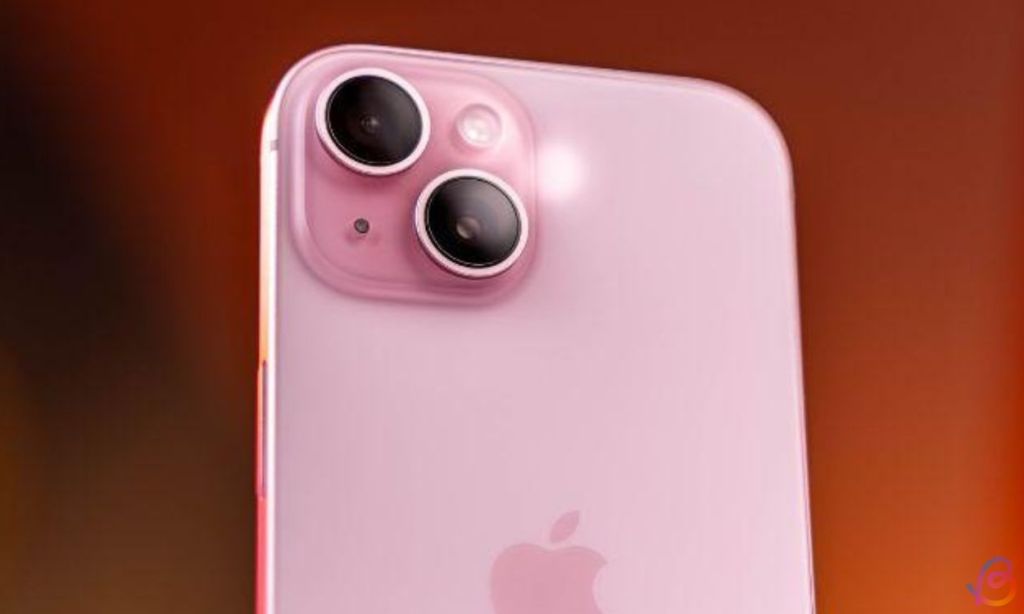
The iPhone 15 also offers macrophotography and enhanced portrait mode with focus control , which the 16e doesn’t come with. Besides, the older iPhone has Action mode for smoother, more-stabilized handheld videos and Cinematic mode for capturing videos with a shallow depth of field and the ability to modify focus transitions for a cinema-grade look. Both of these modes are missing on the iPhone 16e.
3. What about MagSafe, Apple?
When the first leaks of the iPhone SE 4 hit, I had my doubts about seeing MagSafe on it. That’s because, the iPhone SE 3 didn’t support MagSafe, while the more premium (at the time) iPhone 13 series did. But when I came to know that this “new” iPhone will come in iPhone 14’s chassis, I was hopeful that Apple will finally make all of their iPhones MagSafe compatible.
So, when the time came and Apple finally pushed their newsroom post, the first thing I did was look up “MagSafe” across the page, only to see that there was no mention of it . Had the iPhone 16e come at the iPhone SE 3’s price, I would have been fine with it, but this costs $170 more .

Image Credit: tinhkhuong/ Shutterstock
As a tech enthusiast, I own and use a bunch of gadgets, and only some of them are MagSafe compatible. But I like the convenience of just placing my phone on a car stand or a wireless charger. And sticking my power bank on to the phone when I’m in need of a quick charge-up.
I’m sure there are many out-and-out Apple users who might own more MagSafe accessories. At a time when even Android phone and case brands are exploring MagSafe accessories (thanks to the Qi2 standard), the lack of it on the latest iPhone makes no sense. So, if MagSafe means a lot to you and you (or your family) already rely on MagSafe accessories, I’d suggest you get an iPhone 15 instead.
4. Precision Finding or Lack of it

Apple’s iPhone SE lineup was considered by many as the go-to iPhone to buy for your kids or elderly people. That’s because, at under $430, it comprised of everything essential that you can put on a phone. So, if the iPhone 16e is indeed the iPhone SE successor we all expected, it should cover all the bases to justify its higher price, don’t you think?
The answer is no. The latest iPhone misses out on one key component – an ultra-wide band chip that has been part of Apple’s phones since the iPhone 11 . This is the element that aids Precision Finding , a feature that lets you track Apple accessories and pinpoint other iPhones with high accuracy.
This could be part of Apple’s strategy to bring down the cost of the iPhone 16e. But for $599, it isn’t the most economical phone either. So, if you’re planning to buy an iPhone for your children or your old folks and want to track them during emergencies, the iPhone 15 is clearly the safer bet for the price.
iPhone 16e: “e” for Expensive, Egotistic, or Embarrassing?
Being an Apple user myself, I’m not in any way trying to be bashful, but the iPhone 16e is something I can’t comprehend with. In some ways, it’s what we expected the successor to the iPhone SE 3rd generation to be. But there are aspects of it I wish it didn’t do. I get it, Apple wants to sell its AI features to everyone, even the budget-conscious users. But in doing so, I believe it cut the wrong corners .

They could have easily avoided adding their custom C1 modem or satellite connectivity to the mix. Or even the Action button for that matter. Instead, they could have made their ever-so-interactive Dynamic Island more accessible to everyone. Or added an ultra-wide camera or MagSafe support. Or they could have avoided adding any of that and just made the current offering more “economical” if that’s what the “e” in the iPhone 16e stands for.
To bring things into perspective, the iPhone SE 3 was a great deal for its $429 launch price. It offered the same Apple A15 Bionic chip as the then-standard iPhone 13 which launched at $799. For $599, the iPhone 16e isn’t as budget-oriented over the current iPhone 16 that retails for $799. Because of this, I’m not sure who this iPhone 16e is intended for . It’s not a phone I’d recommend to my folks or children, nor is it the ultimate choice for first-time Apple users.
As the owner of an iPhone 15, I don’t feel like I’m missing out on much, but I’d certainly feel the same if I was switching to an iPhone 16e. That’s because, for a mere $100 more, you’re getting most of everything a “casual” user wants from an iPhone, i.e., multiple cameras, Dynamic Island, more color options, MagSafe support, and better ways to track your loved ones when the time comes. And that pretty much sums up why I think you should get the iPhone 15 over the iPhone 16e.

Ajaay’s love affair with technology started young, with the Nokia N-Gage piquing his interest. Since 2016, he’s channeled his passion for tech into crafting explainers and guides on iOS, macOS, Android, social media, privacy & cybersecurity, and AI. When it’s time to unplug, Ajaay enjoys playing EAFC, unwinding to music on a pair of open-backs, building his dream audiophile gear, or watching Arsenal struggle to keep a clean sheet.
Add new comment
Name
Email ID
Δ



- Apple’s upcoming iPhone 17 Pro Mac is set to get a “metalens” technology for Face ID.
- This tech will equip an optical lens with microscopic nano-structures to control light, thus resulting in a smaller Dynamic Island.
- The new Face ID technology will also arrive on the next generation of iPad Pro models, as well as the “folding iPad”.
We’re six months past the release of the iPhone 16 series, and as is the case, all eyes are set on the upcoming lineup. We know Apple has prepared substantial changes in the iPhone 17 lineup, with plans to refresh the overall design and camera setup . Then, there’s the much-anticipated release of the iPhone 17 Slim (or Air) that could be Apple’s ultra-premium iPhone yet. We now have new information on the iPhone 17 Pro Max, and it’s regarding the Dynamic Island it’s going to come with.
As per renowned leaker Digital Chat Station ( via Weibo ), Apple’s upcoming Pro Max model could use a new “metalens” technology for Face ID. This new tech will integrate both the transmitter and receiver elements in one. It’ll thus minimize the size of the Face ID components at the top of the iPhone. This change should result in a smaller Dynamic Island on the iPhone 17 Pro Max display.

This new metalens tech will essentially be an optical lens with microscopic nano-structures. It would be able to manipulate light , unlike the curved lenses on the current set of iPhones. The reduction is size owes to the optical lens itself, which is lightweight and can be flat in nature.
The leaker also revealed that this upcoming Face ID tech will become available on the next line of iPad Pro models, as well as the “ folding iPad “. The latter could be regarding Apple’s potential foldable iPhone , which we haven’t heard anything about recently.
Ultimately, Apple could be preparing to move all of its Face ID tech under the display. Similar to front cameras on phones like Samsung’s Z Fold 6. However, such a change could take years to perfect, and we might still be a few generations away.
If this report turns out to be true, it’ll be the first time in three years that the Dynamic Island gets a refresh. The display cutout has more-or-less remained the same since it debuted on the iPhone 14 Pro.
The iPhone 17 Pro models are expected to feature the same aluminum frame as the standard versions. Its cameras will take on the same design choices, with a rectangular camera bump on an aluminum encasement. The cameras themselves will get a major upgrade, all three lenses will feature 48MP sensors.
Ajaay’s love affair with technology started young, with the Nokia N-Gage piquing his interest. Since 2016, he’s channeled his passion for tech into crafting explainers and guides on iOS, macOS, Android, social media, privacy & cybersecurity, and AI. When it’s time to unplug, Ajaay enjoys playing EAFC, unwinding to music on a pair of open-backs, building his dream audiophile gear, or watching Arsenal struggle to keep a clean sheet.
Add new comment
Name
Email ID
Δ
